
 By
By Letting go of pressure and redefining what care really looks like
Posted on February 13, 2026 Written by: 100% PURE®

In a culture that turns wellness into a checklist and self-care into an aesthetic, it is easy to believe we must “do it right” to benefit. Ten-step routines. Perfect timing. Trending ingredients. Flawless discipline.
But real self-love rarely looks perfect. It looks human.
For many people, skincare has quietly become another arena for performance. If skin feels dry, irritated or reactive, the instinct is often to add more. More actives. More steps. More correction. Yet dermatological research consistently shows that skin thrives on barrier stability and routine predictability, not intensity or constant adjustment (Elias & Wakefield, J Invest Dermatol, 2014).
Self-love, in this context, is not about doing more. It is about showing up — most days — with consistency.
And that consistency is what skin recognises as care.
Why Perfection Creates Stress (for Skin and Mind)
Perfection sounds empowering. In reality, it often increases physiological stress.
Overcomplicated Routines Increase Decision Fatigue
Decision fatigue is a well-documented psychological phenomenon: the more choices we make, the harder subsequent decisions become (Baumeister et al., J Pers Soc Psychol, 1998). In skincare, this can translate to:
- Constant product switching
- Layering incompatible ingredients
- Overcorrecting minor fluctuations
Instead of calming skin, this behaviour can disrupt its barrier.
The skin barrier, primarily composed of corneocytes and intercellular lipids, functions best when protected from frequent irritation. Excessive exfoliation or product cycling can weaken this structure, leading to increased transepidermal water loss (TEWL) and inflammation (Proksch et al., Exp Dermatol, 2008).
Perfection-driven routines often trigger exactly the instability we are trying to avoid.
Stress Undermines Barrier Repair
Psychodermatology research shows that psychological stress increases cortisol levels, which can impair skin barrier recovery and slow wound healing (Denda et al., Arch Dermatol Res, 2000; Gouin & Kiecolt-Glaser, Brain Behav Immun, 2011).
When we feel pressured to “fix” our skin perfectly:
- Cortisol rises
- Inflammation increases
- Barrier repair slows
In other words, the stress of perfection can physiologically interfere with calm skin function.
A realistic skincare routine supports both skin and nervous system stability.
What Realistic Self-Care Looks Like
A powerful simple self care routine is not flawless. It is repeatable.
Showing Up Most Days, Not Every Day
Barrier repair and collagen support are cumulative processes. They rely on repetition over time, not intensity in a single evening.
Missing a day does not undo progress. Skin renewal cycles operate over approximately 28 days in younger adults and longer with age (Verdier-Sévrain & Bonté, Eur J Dermatol, 2007). What matters is returning gently, not abandoning the routine entirely.
This mindset reduces stress — which, in turn, reduces inflammation.
Simple Routines That Feel Supportive, Not Demanding
An easy skincare routine should feel like relief, not another obligation.
Supportive routines share common features:
- Barrier-respecting cleansing
- Non-irritating active support
- Adequate hydration
- Sensory calm
100% PURE embodies this philosophy by crafting formulations rooted in gentle plant-based ingredients, with in-house chemists selecting components for both efficacy and sensory harmony. The brand’s commitment to intentional development reflects a deeper belief: skincare should feel respectful — to skin and planet.
A Gentle, Real-Life Evening Routine
Evening is when the skin transitions into repair mode. Studies show that epidermal proliferation and barrier recovery increase at night (Hardman et al., J Invest Dermatol, 2015). Supporting this process does not require complexity — it requires calm consistency.
Cleanse: Reset Without Effort or Irritation
A good cleanse removes environmental debris without stripping lipids.
The Rose Water Gentle Cleanser uses rose hydrosol and soothing botanicals to refresh while respecting barrier integrity. Rose extracts have demonstrated antioxidant and mild anti-inflammatory properties (Boskabady et al., Iran J Basic Med Sci, 2011).
Gentle cleansing reduces oxidative burden accumulated during the day without triggering barrier disruption — a crucial foundation for realistic skincare routine consistency.
Application tip:
Use slow circular motions for 30–45 seconds. This stimulates mild circulation while avoiding friction.
Tone: Rebalance Skin Gently
Niacinamide is one of the most extensively studied barrier-supporting ingredients. Clinical research shows it improves ceramide synthesis, reduces TEWL, and enhances barrier resilience.
The Lavender Niacinamide Pore Minimizer Tonique combines:
- Niacinamide for barrier strengthening
- Lavender for calming sensory support
Lavender aromatherapy has been associated with reduced anxiety markers in clinical settings.
Pressing toner gently into skin — rather than wiping aggressively — reduces friction and supports mindful application.
Moisturize: Comfort and Hydrate Without Heaviness
Hydration supports enzymatic processes involved in desquamation and repair. A compromised barrier loses water rapidly, leading to tightness and irritation.
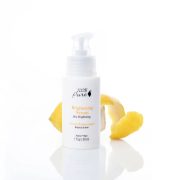
The Rose Water Hydrating Milk offers lightweight moisture suitable for a realistic daily routine. Its texture encourages consistent use — a critical but often overlooked factor in long-term skin health.
Hydrating formulations improve skin elasticity and comfort, supporting barrier recovery over time.
Moisturiser does not need to feel heavy to be effective. In fact, textures that feel breathable are more likely to be used consistently.
Consistency builds results.
Body Ritual: A Calming Pause Before Rest
Skin is not limited to the face. The body contains extensive sensory nerve endings that respond to temperature, touch, and scent.
Warm showers stimulate parasympathetic activity, particularly when paired with calming scents. Lavender has demonstrated mild anxiolytic properties in clinical research.
The French Lavender Shower Gel transforms cleansing into a signal of transition — from productivity to rest.
This matters because nighttime cortisol reduction supports overnight barrier repair.
A small ritual can have systemic effects.
How Letting Go Improves Skin Over Time
When pressure decreases, skin often stabilises.
Less Inflammation
Chronic low-grade inflammation contributes to sensitivity, breakouts, and premature ageing. Reducing stress through predictable routines can lower inflammatory signalling
A simple self care routine reduces:
- Over-exfoliation
- Barrier assault
- Psychological stress
Together, these decrease inflammatory burden.
More Routine Consistency
Behavioural science shows habits form more reliably when routines are simple and contextually anchored.
An elaborate routine may be exciting initially but difficult to sustain. A manageable evening ritual, however, becomes automatic.
And skin responds best to what it receives regularly.
Conclusion: Self-Love That Fits Your Life Lasts Longer
Self-love does not have to be aesthetic. It does not have to be elaborate. It does not have to be perfectly documented or flawlessly executed.
Powerful self-care is quiet.
It is washing your face when you are tired — not because you must, but because you deserve comfort.
It is pressing toner gently into your skin instead of scrubbing in frustration.
It is moisturising consistently, even when results feel slow.
Skin is not a machine that responds instantly to intensity. It is a living organ influenced by stress hormones, circadian rhythms, hydration levels, and emotional states.
When routines become gentler:
- Cortisol stabilises.
- Barrier repair improves.
- Inflammation decreases.
- Sensitivity reduces.
Perfection demands performance.
Consistency builds trust.
And trust — between you and your skin — is what allows real change.
A realistic skincare routine acknowledges that life is full. Some evenings will be short. Some days will be missed. None of that cancels progress.
What matters is returning.
Because self-love that adapts to your life will always outlast self-love that demands perfection.
FAQ Section
Is a short routine still effective?
Yes. Dermatological research supports barrier stability and hydration as foundational priorities. A cleanse, supportive treatment, and moisturiser are sufficient for most people when used consistently.
What if I miss days?
Skin does not reset to zero overnight. Missing occasional days will not undo progress. Returning gently is more beneficial than abandoning the routine entirely.
Can imperfect routines still improve skin?
Absolutely. Long-term skin health depends more on consistency than intensity. Even a simple skincare routine can improve hydration, barrier strength, and comfort when maintained over time.