 By
By How constant switching creates stress and imbalance
Posted on February 16, 2026 Written by: 100% PURE®

Somewhere between the 12-step “glass skin” tutorial and the breathless product haul, skincare stopped being care and became sport.
New drop. New miracle ingredient. New “holy grail.” A fresh set of rules every week, delivered with the urgency of breaking news: Stop using that. Start using this. Your pores are crying. Your barrier is begging. Everyone is double-cleansing with fermented moss now.
And if you’ve ever felt a twitch of panic—Am I behind? Am I doing it wrong?—you’re not alone.
But here’s the thing: your skin doesn’t respond to trends the way your feed does. Skin isn’t built for constant novelty. Skin is a system—smart, protective, reactive—and it prefers stability. It thrives on what it can predict.
If you’re worried about skincare trends damage skin, or you suspect you’re stuck in a loop of skincare routine mistakes and overusing skincare products, this is your permission slip to step off the trend treadmill.
Because healthy skin is not a viral moment. It’s a relationship.
Why Trends Create Skin Stress
Trends aren’t inherently evil. But trend culture rewards speed and intensity—two things your skin generally hates.
Overuse of actives
Actives can be transformative. But in trend-land, they’re often stacked like a cocktail: retinoids + acids + vitamin C + “brightening” something + exfoliating something else, all because you saw a 30-second reel that made it look normal.
The problem? Skin has limits.
When you pile on strong ingredients without enough recovery time, you can trigger irritation, dryness, inflammation, and the kind of sensitivity that makes everything sting—including products that used to feel fine.
More isn’t more. More is often just louder.
Inconsistent ingredient exposure
Switching products constantly means your skin never gets to settle. One week it’s acids. Next week it’s peptides. Then it’s a barrier balm. Then you hear everyone is “slugging,” so you do that too. Then you stop because someone says it causes congestion. Then you panic-buy a clarifying serum.
Your skin experiences this as environmental whiplash. It can’t adapt to what keeps changing. Instead, it stays on high alert—reactive, uncertain, unpredictable.
Barrier disruption
Your skin barrier is the bouncer at the door. When it’s strong, your skin holds water better, stays calmer, and resists irritants. When it’s compromised, everything gets in (irritation, allergens, bacteria) and everything leaks out (hydration).
Trend-driven routines—especially ones heavy on actives and exfoliation—can quietly dismantle that barrier over time. You might think you’re “improving texture,” but what you’re actually doing is making your skin more vulnerable.
Signs Your Skin Is Overwhelmed by Switching
Skin doesn’t always send a dramatic memo. Sometimes it whispers. Sometimes it tantrums. Either way, these are common signs you’re doing too much, too often.
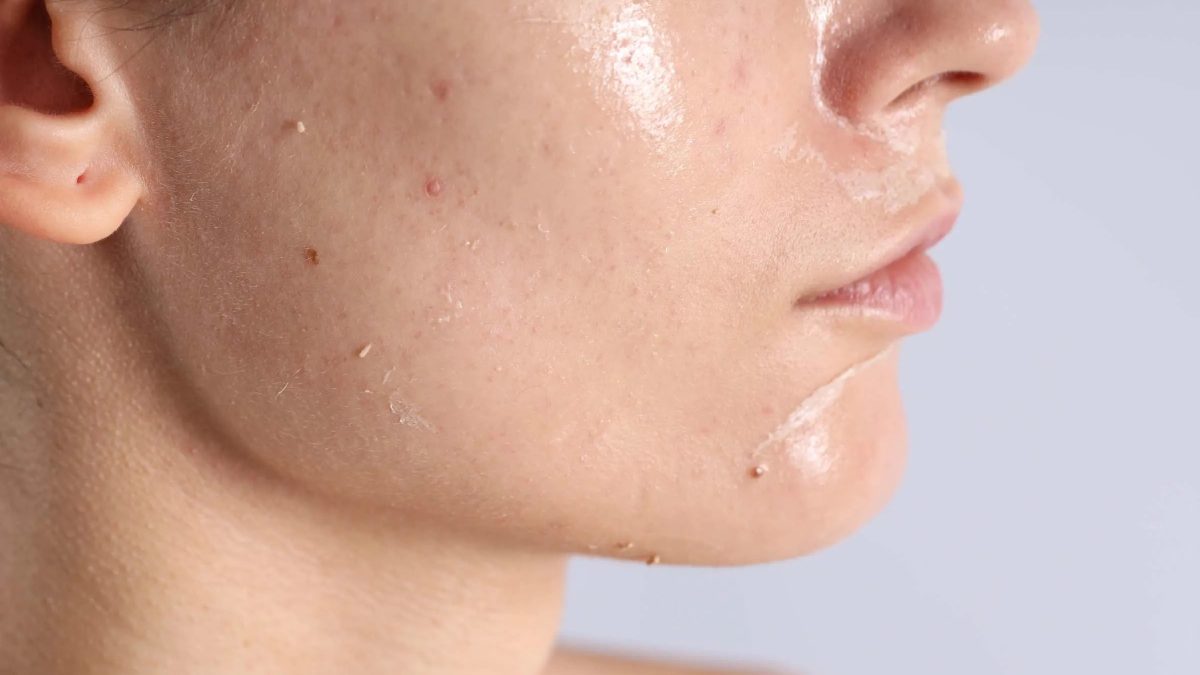
Sensitivity and irritation
- Stinging when you apply products
- Redness that lingers
- Random itchy patches
- “Suddenly everything burns” energy
That’s not your skin being fussy. That’s your skin waving a little flag that says: Please stop experimenting on me.
Dullness and dehydration
Overworking the skin can lead to a confusing outcome: you’re using more products, yet your skin looks flatter, tighter, and less alive.
Dehydrated skin often looks dull. It can also overproduce oil to compensate, which then sends you chasing “oil-control” products—making the cycle worse.
Inconsistent results
If your skin has good days and bad days with no clear pattern, routine switching might be the culprit. When you’re always introducing new variables, you can’t tell what’s helping, what’s hurting, and what’s simply coincidental.
Trends create noise. Skin loves clarity.
Why Gentle, Repetitive Care Works Better
This is where skincare gets quietly radical: the best results often come from doing less—with more consistency.
Skin adapts to what it knows
When you use the same supportive routine regularly, your skin learns it. It stabilizes. It stops bracing for impact. Over time, hydration improves, sensitivity can calm down, and the overall look becomes more even—because your skin is no longer stuck in constant defense mode.
Predictability supports healing
Healing requires conditions: enough moisture, minimal irritation, and time. Predictability creates those conditions.
Trends say, “Do something new.”
Repair says, “Do something steady.”
And steady is what builds trust—both in your skin and in yourself.
A Trend-Free Evening Routine
A trend-free routine isn’t boring. It’s mature. It’s you choosing long-term health over short-term hype. It’s also the easiest way to stop overusing skincare products without feeling like you’re “giving up.”
Here’s a simple, consistent evening routine designed to support calm, balanced skin.
Cleanse: Gentle, consistent cleansing
Cleansing is where you reset—removing sunscreen, makeup, pollution, and the day itself without stripping your skin’s protective layer.
Make it ritual: Cleanse slowly. Same steps, same order, every night. Your skin loves the predictability.
Tone: Balanced nightly care
This step supports balance and can help skin feel more settled—especially if you’re recovering from irritation or overwhelm. Lavender brings a calming element; niacinamide is a consistent-care staple that fits well into steady routines.
Make it ritual: Press it in with your hands. Gentle pressure. No rushing. Let your face unclench.
Moisturize: Reliable hydration and comfort
Moisturizer is your daily vote for barrier support. It’s what helps reduce that tight feeling and supports the skin’s ability to hold onto hydration overnight.
Make it ritual: Apply while skin is slightly damp for a softer, more comfortable finish.
Body Ritual: Calm the nervous system nightly
Skin health isn’t isolated from stress. A calming body ritual supports sleep—when repair processes can do their best work. Lavender also helps signal “wind down” mode to your brain.
Make it ritual: Keep the scent consistent. Let it become your nightly “off switch.”
Conclusion: Healthy Skin Grows Through Trust, Not Trends
Trends will always be there, shouting for your attention.
But your skin doesn’t need constant upgrades. It needs steadiness. It needs fewer surprises. It needs you to stop treating it like a problem to solve and start treating it like a system to support.
Healthy skin is built the way strong relationships are built:
through repetition, patience, and trust.
Not trends.
FAQ
Are all skincare trends bad?
Not necessarily. Some trends introduce genuinely useful ingredients or techniques. The issue is speed and frequency—trying everything at once, switching constantly, and treating your routine like a rotating cast. If you want to try something new, introduce one change at a time and give it enough time to show whether it helps.
How often should I change my routine?
Less often than trend culture suggests. A good approach is to keep a stable baseline routine and only adjust when you have a clear reason—seasonal changes, a specific skin issue, or a product that truly isn’t working. If your skin is sensitive or reactive, stability matters even more.
Can skin recover after too much switching?
Yes. Skin is resilient—especially when you stop overwhelming it. A simplified, gentle routine and consistent hydration can support barrier recovery and help your skin return to a calmer baseline. The key is to commit long enough for your skin to settle instead of restarting the experiment every week.